AIPDMA Blogs

traya case study fastest growing hair health brand

Traya Case Study: How Traya Built India’s Fastest-Growing Hair Health Brand

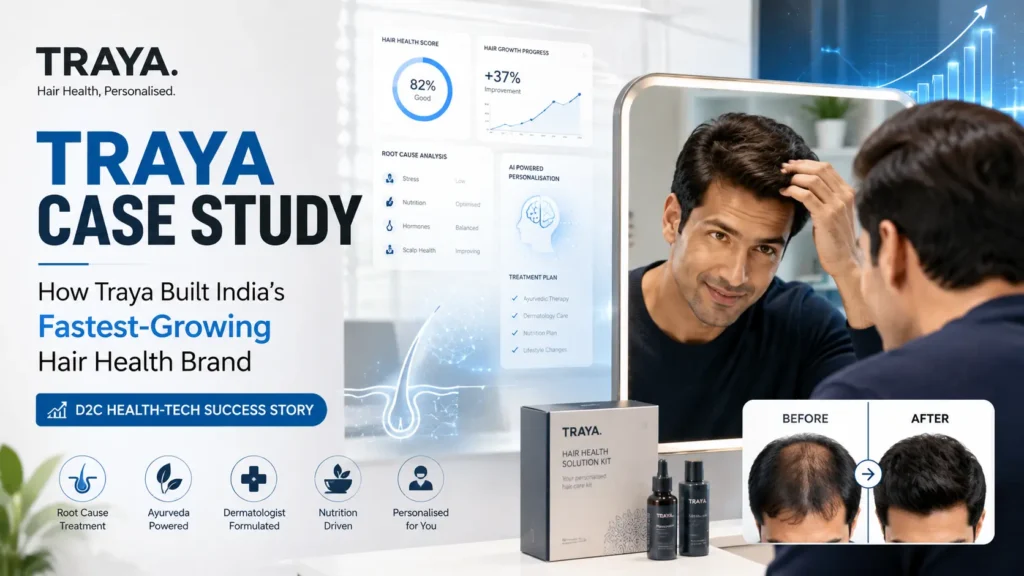
Traya Case Study: How Traya Built India’s Fastest-Growing Hair Health Brand Introduction Imagine losing hair every day and trying dozens of products that promise results but deliver nothing. Sounds frustrating. Unfortunately, this is a problem faced by millions of people across India. Hair fall is one of the most common health concerns among both men and women. People spend thousands of rupees on: Yet many people continue to struggle with hair loss. Why? Because most products focus on symptoms rather than root causes. This gap created a massive opportunity. And one startup decided to solve it differently. That startup was Traya. Today, Traya is one of India’s fastest-growing hair health brands. The company has helped thousands of customers through a science-backed approach that combines Ayurveda, Dermatology, and Nutrition. More importantly, it built a powerful direct-to-consumer brand in one of India’s most competitive markets. This Traya Case Study explores how the company identified a hidden problem, created a unique solution, and built one of India’s most successful health and wellness brands. The Hair Fall Problem Nobody Was Solving Properly Every successful startup begins with a problem. Traya started by asking a simple question. Why do most hair fall solutions fail? The answer was surprisingly simple. Hair loss is not caused by one factor. It can happen because of: Most brands sold the same solution to everyone. One shampoo. One oil. One serum. One supplement. But hair fall is personal. What works for one person may not work for another. This was the biggest gap in the market. Millions of people wanted personalized solutions. Very few companies were offering them. Traya saw this opportunity early. The Founders Behind Traya Traya was founded by Saloni Anand, Jitendra Chouksey, and Pranav Bhasin. The founders came from different professional backgrounds. Together, they shared one vision. Create a hair health company that treats the root cause instead of hiding the problem. Instead of launching another shampoo brand, they wanted to build a complete hair health ecosystem. This approach immediately differentiated Traya from traditional hair care companies. Most competitors focused on products. Traya focused on outcomes. That difference became the foundation of its success. Why India’s Hair Care Market Was Ready for Change Timing played a huge role in Traya’s growth. India’s hair care industry was already worth billions of rupees. Consumers were becoming more health-conscious. People were searching online for: At the same time, trust in generic products was declining. Customers wanted solutions backed by science. They wanted brands that understood their specific problems. This shift created a huge opportunity for a personalized health brand. Traya entered the market at exactly the right time. The Unique Traya Model What makes Traya different? The answer lies in its treatment approach. Most hair care brands focus on external treatment. Traya looks at the complete picture. The company combines: This three-way approach helps identify the root causes behind hair loss. Instead of selling products immediately, Traya starts with a hair health assessment. Customers answer questions about: Based on the results, the company recommends personalized treatment plans. This created a powerful customer experience. People felt understood. And customers are more likely to trust brands that understand their problems. Product-Market Fit Behind Traya’s Growth Many startups fail because they build products nobody needs. Traya avoided that mistake. The company solved a real problem. Customers wanted: Traya delivered all four. This created strong product-market fit. Once customers started seeing results, word-of-mouth growth followed naturally. Happy customers became brand ambassadors. That helped reduce customer acquisition costs and accelerate growth. How Traya Built Trust in a Skeptical Market The hair care industry is filled with exaggerated claims. Consumers have seen countless advertisements promising instant results. Because of this, trust becomes extremely important. Traya focused heavily on transparency. The company educated customers about: Rather than making unrealistic promises, the brand focused on realistic expectations. This helped build long-term credibility. Trust became one of Traya’s biggest competitive advantages. The Digital Marketing Strategy Behind Traya One of the biggest reasons behind Traya’s growth was its digital-first strategy. Unlike traditional brands that relied heavily on retail stores, Traya focused on online channels. This allowed the company to reach customers across India. Content Marketing Traya invested heavily in educational content. The company created blogs, videos, and guides around topics such as: This content attracted people actively searching for solutions. As traffic increased, lead generation improved. Performance Marketing The company used targeted advertising to reach potential customers. Instead of promoting products directly, many campaigns focused on solving problems. This approach improved engagement and conversion rates. Quiz Funnel Strategy One of Traya’s smartest growth strategies was its hair assessment quiz. The quiz helped: The quiz became a major customer acquisition engine. Why Personalization Became Traya’s Superpower Modern consumers expect personalized experiences. Traya recognized this trend early. Instead of treating customers as a large group, the company treated each customer individually. Every recommendation felt unique. This created several benefits: Personalization helped Traya stand out in a crowded market. How Technology Helped Traya Scale Technology played an important role in the company’s growth. The platform collected information through assessments and customer interactions. This data helped improve treatment recommendations. Technology also helped: By combining healthcare with technology, Traya created a scalable business model. Why Investors Became Interested in Traya Investors look for businesses with strong growth potential. Traya offered several attractive qualities. Large Market Opportunity Hair health affects millions of people. The potential customer base is enormous. Recurring Revenue Customers often remain on treatment plans for several months. This creates recurring revenue opportunities. Strong Brand Positioning The company built a unique identity around root-cause treatment. Digital Scalability The online-first model allows rapid expansion without large retail investments. These factors helped attract investor attention and support growth. Challenges Traya Faced Every startup faces obstacles. Traya was no exception. Building Trust Many consumers were skeptical because of previous experiences with ineffective products. Customer Education The company had to explain why personalized treatment mattered. Long Treatment Cycles Hair growth takes time. Customers needed patience and commitment.

Traya Case Study: How Traya Built India’s Fastest-Growing Hair Health Brand Read More »
agnikul cosmos case study how agnikul built india's first private rocket launch ecosystem

AgniKul Cosmos Case Study: How AgniKul Built India’s First Private Rocket Launch Ecosystem

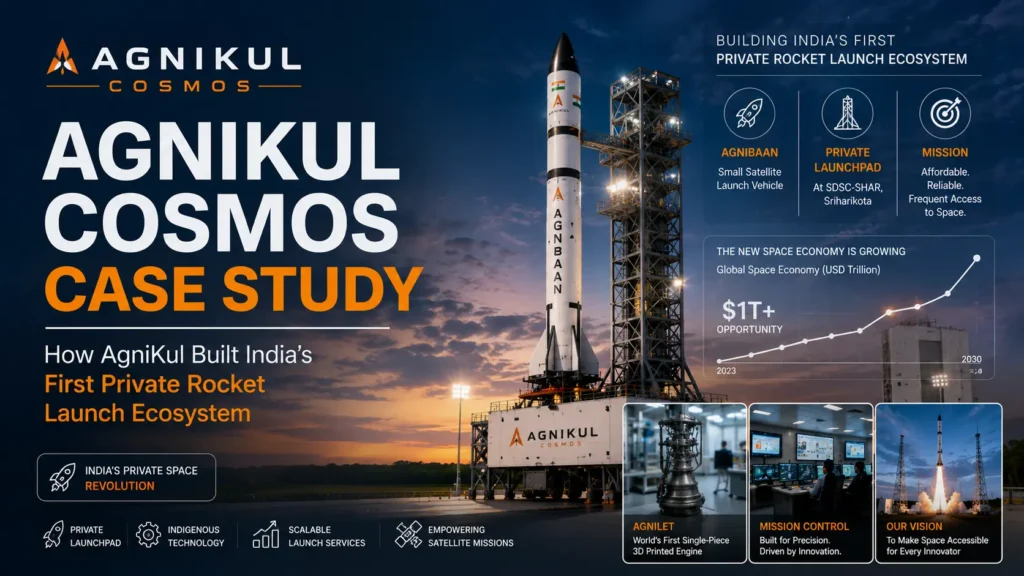
AgniKul Cosmos Case Study: How AgniKul Built India’s First Private Rocket Launch Ecosystem Introduction Imagine building a rocket launchpad before launching your first commercial rocket. Sounds risky. Most startups focus on building a product first. AgniKul Cosmos decided to build an entire ecosystem. And that decision helped the company become one of India’s most exciting space-tech startups. Today, AgniKul Cosmos is recognized as one of the pioneers of India’s private space revolution. The company made headlines by developing Agnibaan, a launch vehicle designed for small satellites, and by building India’s first private launchpad at the Satish Dhawan Space Centre. But AgniKul’s journey is much bigger than rockets. It is a story about innovation, deep technology, persistence, and believing in a future that did not yet exist. For decades, access to space was controlled by governments and large organizations. Launching satellites was expensive. Launch opportunities were limited. Small companies often struggled to get their payloads into orbit. This challenge was faced globally. Satellite operators faced several problems: Meanwhile, demand for satellites was exploding. Companies needed satellites for: The demand was growing. But launch capacity was not growing fast enough. This created a massive opportunity. Most people saw challenges. A group of engineers from Chennai saw a future industry. That vision became AgniKul Cosmos. This AgniKul Cosmos Case Study explains how the startup built India’s first private rocket launch ecosystem and became one of the most promising players in the country’s space-tech industry. The Founders Behind AgniKul Cosmos Every startup begins with a problem. But great startups begin with a mission. AgniKul Cosmos was founded in 2017 by Srinath Ravichandran and Moin SPM. The founders believed that the future of space would belong to private innovators. At the time, India was known for its successful space missions. ISRO had already earned global respect. However, private participation in the sector was still limited. The founders saw an opportunity. They believed smaller satellite operators needed more launch options. They believed rockets should become more flexible and affordable. Most importantly, they believed India could become a major player in the global commercial space industry. That belief became AgniKul Cosmos. The Problem AgniKul Wanted to Solve The space industry was changing rapidly. Satellites were becoming smaller. Technology was becoming cheaper. More organizations wanted access to space. But launch services remained a major bottleneck. Many customers faced challenges such as: Imagine building a satellite and then waiting months for a launch opportunity. That was the reality for many companies. The founders understood that the future would require faster and more flexible launch solutions. Instead of treating satellites as cargo on larger missions, customers wanted dedicated launches. This demand created a significant market opportunity. Why the Small Satellite Revolution Created a Huge Opportunity One of the biggest trends in the space industry is the rise of small satellites. Traditional satellites often cost millions of dollars and required years to develop. Modern satellites are different. They are: This shift changed the economics of space. Universities started launching satellites. Startups entered the industry. Research institutions expanded their missions. Governments invested in new space applications. Industry reports estimate that thousands of small satellites will be launched during the coming decade. Every one of those satellites needs a launch vehicle. AgniKul recognized this trend early. Instead of competing in traditional markets, the company focused on the future. The Birth of Agnibaan Every successful startup needs a product that solves a real problem. For AgniKul, that product was Agnibaan. Agnibaan is a customizable launch vehicle designed for small satellite missions. The company built it with one goal. Provide flexible and dedicated launch solutions. Unlike traditional launch systems, Agnibaan allows customers to choose configurations based on mission requirements. This flexibility became one of the company’s biggest advantages. Customers were no longer forced to fit into predefined launch schedules. Instead, launch services could adapt to customer needs. That customer-first approach helped AgniKul stand out. The World’s First Single-Piece 3D Printed Rocket Engine Innovation became one of AgniKul’s strongest competitive advantages. The company gained international attention for developing Agnilet. Agnilet is a single-piece 3D printed rocket engine. This achievement was significant because traditional rocket engines often require multiple parts and complex assembly processes. By using advanced manufacturing techniques, AgniKul reduced complexity. The benefits included: This innovation demonstrated the company’s engineering capabilities. It also attracted investor interest. In deep-tech industries, strong technology often becomes the biggest growth driver. Building India’s First Private Rocket Launchpad Most startups build products. AgniKul built infrastructure. One of the company’s most historic achievements was the development of India’s first private launchpad and mission control center. The facility was established within the Satish Dhawan Space Centre in Sriharikota. This was a major milestone for India’s private space industry. Why was it important? Because launch infrastructure is one of the biggest barriers in the aerospace sector. By building its own launch ecosystem, AgniKul gained greater operational control. The company could test, prepare, and execute missions more efficiently. This achievement also demonstrated growing collaboration between public institutions and private innovators. India’s Space Reforms Changed Everything Timing is often as important as technology. For years, private participation in India’s space industry remained limited. Things started changing when the government introduced reforms. New policies encouraged private innovation. Organizations such as IN-SPACe were established to support private participation. This created opportunities for startups like AgniKul. The company entered the market at exactly the right time. The combination of regulatory support and growing market demand created a powerful environment for growth. Many successful startups benefit from market timing. AgniKul is a perfect example. Why Investors Backed AgniKul Cosmos Space startups require significant capital. Investors only support these businesses when they see strong potential. AgniKul attracted funding because it offered several advantages. Strong Founding Team The founders had technical expertise and a clear vision. Massive Market Opportunity The satellite launch market is expected to grow significantly over the coming years. Proprietary Technology The company’s innovations created strong competitive advantages. Infrastructure Ownership Building a private launch ecosystem strengthened the company’s

AgniKul Cosmos Case Study: How AgniKul Built India’s First Private Rocket Launch Ecosystem Read More »

skyroot aerospace case study how skyroot became india's first space tech unicorn new

Skyroot Aerospace Case Study: How Skyroot Became India’s First Space-Tech Unicorn

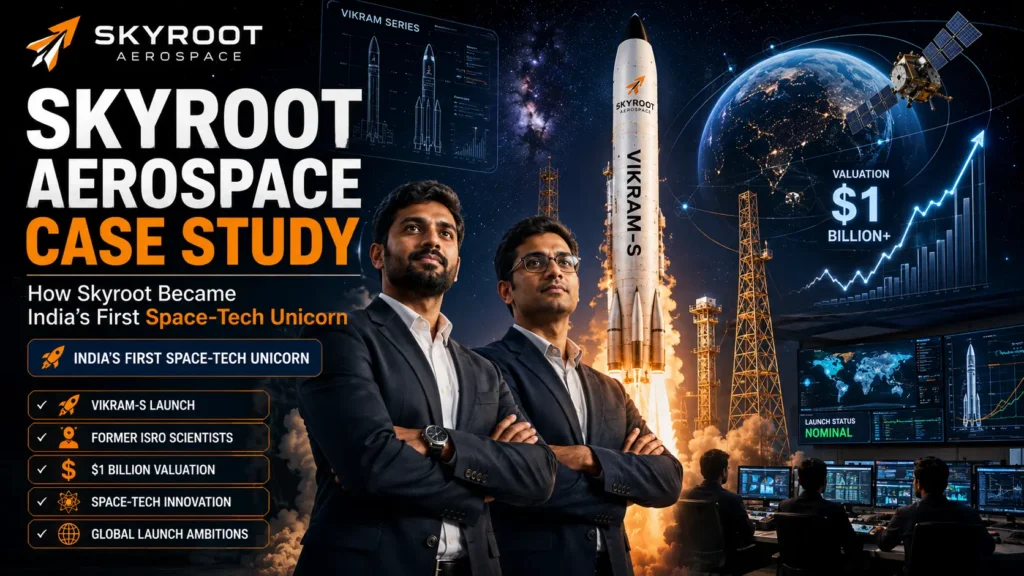
Skyroot Aerospace Case Study: How Skyroot Became India’s First Space-Tech Unicorn Introduction Imagine building rockets in a country where private companies were not even allowed to launch them a few years ago. It Sounds impossible. Yet that’s exactly what Skyroot Aerospace achieved. What started as a bold dream by two former ISRO scientists has now become one of India’s biggest startup success stories. Today, Skyroot Aerospace is valued at over $1 billion, making it India’s first space-tech unicorn. Even more impressive? The company is helping India enter a new era where private startups can build rockets, launch satellites, and compete in the global space industry. For decades, space missions were mostly handled by government agencies. Launching satellites was expensive. Launch slots were limited. Small companies often had to wait months or even years to get access to space. This challenge was faced by satellite companies across the world. Organizations struggled with: At the same time, the demand for satellites was exploding. New satellites were being built for: The demand was growing. But launch capacity was not growing at the same speed. This created a huge market gap. Most people saw a difficult industry. Two engineers saw a billion-dollar opportunity. That opportunity became Skyroot Aerospace. This Skyroot Aerospace Case Study explains how a startup from Hyderabad built India’s first space-tech unicorn and what entrepreneurs can learn from its incredible journey. The Founders Behind Skyroot Aerospace Every great company starts with a vision. Skyroot Aerospace was founded in 2018 by Pawan Kumar Chandana and Naga Bharath Daka. Both founders worked at ISRO before starting the company. During their time at ISRO, they gained deep knowledge about rocket systems, satellite launches, and aerospace engineering. But they also noticed something important. The future of space would not belong only to governments. Private companies would play a major role. Across the world, private space companies were attracting investments and creating new opportunities. Companies like SpaceX had already shown that private innovation could transform the industry. India had talented engineers. India had world-class scientists. India had a growing startup ecosystem. What was missing was private participation in the space sector. The founders decided to change that. Instead of waiting for the future, they decided to build it. That decision laid the foundation for one of India’s most exciting startups. The Problem Skyroot Wanted to Solve Every successful startup solves a problem. Skyroot focused on a problem that affected thousands of organizations. Launching satellites was difficult. Many satellite operators faced challenges such as: For startups and research organizations, these problems could slow down innovation. Many small satellite companies had great ideas but struggled to get their satellites into orbit. The founders believed this process needed to change. They wanted to create launch vehicles that were: This simple goal became the foundation of the company. Why the Space Industry Was Ready for Change Timing plays a huge role in startup success. Skyroot entered the market at the perfect time. The global space industry was changing rapidly. Satellites were becoming smaller, cheaper, and more powerful. This allowed more companies to enter the market. Universities started building satellites. Research organizations launched experiments. Startups developed satellite-based products. Governments increased investments in space technology. According to industry estimates, the global space economy is expected to cross $1 trillion within the next decade. Thousands of satellites are expected to be launched in the coming years. Every satellite needs a launch vehicle. This created a massive opportunity. The founders understood that the future would require more launch providers. They positioned Skyroot to meet that demand. The Birth of the Vikram Rocket Series One of Skyroot’s biggest achievements was the development of the Vikram rocket family. The rockets are named after Dr. Vikram Sarabhai, the father of India’s space program. The goal was not simply to build rockets. The goal was to create launch vehicles designed for modern satellite missions. The company focused on: Unlike traditional launch systems, Skyroot wanted to create solutions that could adapt to different customer needs. This customer-focused approach helped the company stand out. Instead of selling rockets, Skyroot was selling access to space. That difference became one of its biggest strengths. How Skyroot Used Innovation as a Competitive Advantage Innovation is often the biggest advantage for startups. Skyroot invested heavily in technology. The company adopted advanced manufacturing methods such as: These innovations helped reduce production time and improve efficiency. In aerospace, even small improvements can create major cost savings. The company focused on building technology that could scale. Rather than copying existing solutions, Skyroot developed its own approach. This helped create strong competitive advantages. India’s Space Reforms Opened New Doors One major reason behind Skyroot’s growth was India’s space sector reforms. For many years, private participation in space activities was limited. Things began to change when the government opened the sector to private companies. New policies encouraged innovation. Private startups received opportunities to collaborate with government organizations. The creation of IN-SPACe also helped private companies participate in the ecosystem. This created a favorable environment for growth. Skyroot entered the market at exactly the right time. The company combined technical expertise with a rapidly changing industry. That combination proved powerful. The Historic Vikram-S Launch Every startup has a defining moment. For Skyroot, that moment came in November 2022. The company successfully launched Vikram-S. This became India’s first privately developed rocket to reach space. The mission attracted national and international attention. But the launch was important for another reason. It proved that a private Indian company could build and launch advanced space technology. The successful mission increased credibility. Customers gained confidence. Investors gained confidence. The industry took notice. For a startup operating in a high-risk sector, credibility is everything. Vikram-S helped Skyroot earn that credibility. Why Investors Backed Skyroot Aerospace Building rockets requires significant investment. Investors do not support aerospace startups unless they see strong potential. Skyroot had several advantages. A Strong Founding Team Investors trusted the founders because of their technical expertise and industry experience. Large Market Opportunity The space

Skyroot Aerospace Case Study: How Skyroot Became India’s First Space-Tech Unicorn Read More »

This website uses cookies to provide you with the best browsing experience.

Accept
Decline